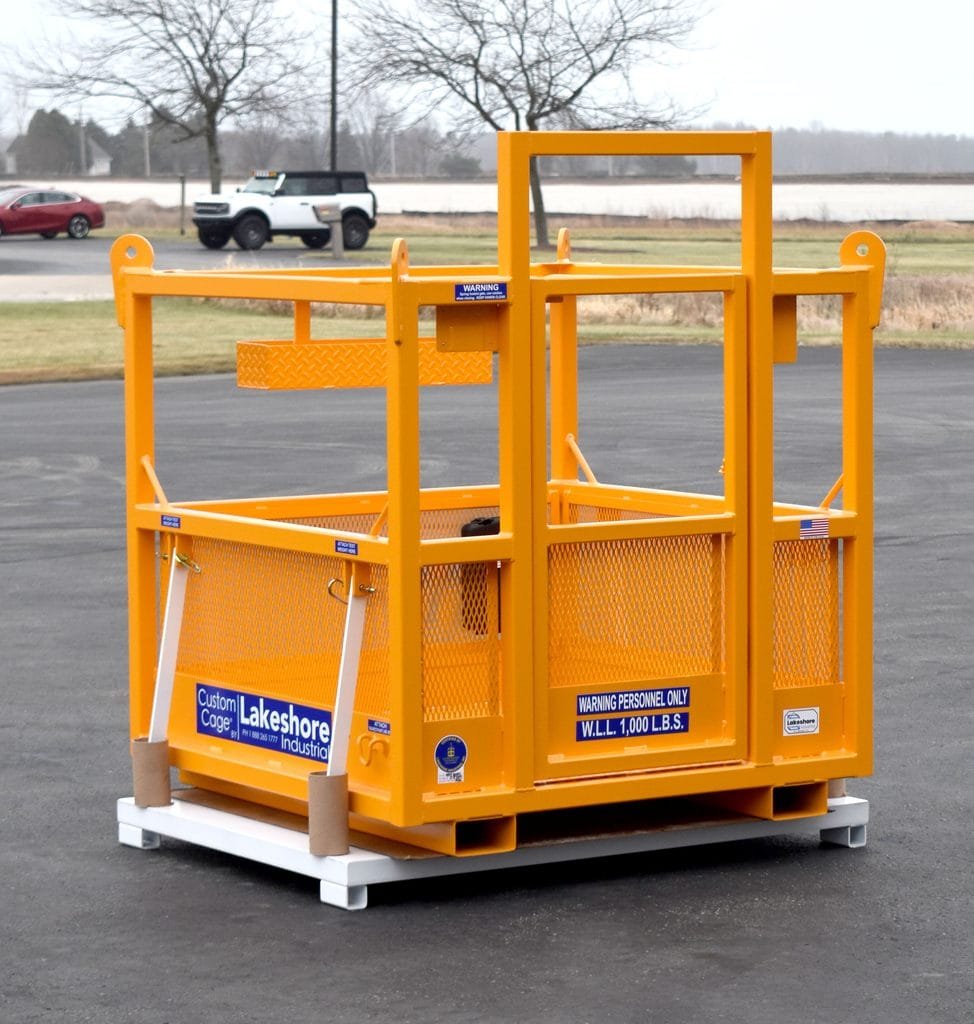
Lifting personnel with a crane is one of the most dangerous tasks on any job site, and much of what keeps a crew safe happens before the basket ever leaves the ground. OSHA recognizes this, which is why a pre-lift meeting is required before personnel hoisting begins. That is what this blog will dive into: who needs to attend, what the meeting should cover, and a checklist your crew can take to the job site. This blog will be referencing ASME B30.23 and OSHA 29 CFR, Part 1926.1431 subpart CC.
What is a pre-lift meeting?
A pre-lift meeting is a briefing held before the trial lift at each new work location. Its purpose is simple: make sure everyone involved understands the plan, the equipment, and the hazards before anyone steps into the basket. Yes, it takes time. But compared to the cost of a mistake at height, ten minutes on the ground is one of the best investments a crew can make.
It also helps to remember why this meeting exists. OSHA generally limits crane personnel hoisting to situations where other methods, like scaffolding or aerial lifts, would be more hazardous or are not possible. Your crew should be able to explain why a man basket is the right tool for the job.
Who must attend a pre-lift meeting?
According to OSHA, the meeting must include the crane operator, the signal person, the employees who will be lifted, and the person directing the work. When a new worker is assigned to the lift, that worker needs to be briefed as well.
One shortcut to avoid is holding the meeting with only the operator and the supervisor. The workers riding in the basket have the most at stake and need to be in the room.
Pre-lift meeting checklist
1. Confirm the equipment
Start with the basket itself. Every certified man basket should have a non corrosive tag stamped with its capacity, net weight, and serial number. Make sure it is present and readable. Then walk the basket and check the guardrails, toe boards, gate latch, lift points, and tie off points for damage. Confirm the rigging has been inspected, and that the crane is level and set up on firm ground.
2. Check the total lifted load
Perhaps one of the most common causes of accidents when using a crane is overloading. When hoisting personnel, the total lifted load must not exceed 50% of the crane’s rated capacity at the planned radius. Your lift plan should reference the crane’s load chart for that radius. To calculate the load, use the basket’s rated capacity plus the net weight of the basket, and don’t forget the rigging.
Weigh the workers, tools, and materials rather than guessing. Never put more people in the basket than its capacity allows.
3. Review what goes in the basket
According to 1926.1431(f)(2)(i), it is only acceptable to lift personnel along with the tools and materials absolutely necessary to do the job. Small hand tools are fine as long as they are secured and evenly distributed across the platform floor. Evenly distributed weight also helps the basket stay within 10 degrees of level.
If the job calls for moving heavy material, plan a separate lift with a material basket instead.
4. Walk the lift path and identify hazards
Agree on where the basket starts, where it travels, and where it lands. Look for overhangs, boom interference, and any location where the operator will lose sight of the basket. Crane operators should also avoid hazardous lift locations such as near power lines or anything flammable.
5. Set the communication plan
Decide who gives signals and how: radio or hand signals. The operator and the people in the basket need to stay in constant contact for the whole lift. Agree on the stop signal, and make sure everyone knows the operator stays at the controls while the basket is occupied.
6. Agree on fall protection
Every person in the basket must wear a body harness with a lanyard. Walk through where each person will tie off, and make sure everyone knows where the tie off points are. A basket with full perimeter tie off points makes this much easier than one with a single anchor.
7. Set your weather limit
Crane man baskets are required to be wind resistant up to 20 mph. When wind is greater than 20 mph, OSHA requires a qualified person to determine whether conditions remain safe to continue. Don’t wait until the wind picks up to have that conversation. Decide on the limits in the meeting, along with lightning and visibility.
8. Plan for emergencies
A safety plan should include an exit strategy if conditions become unsafe. If something goes wrong, the operator should never panic and should always move the basket in a slow, controlled manner. Decide who makes the call, who responds, and what equipment is on site. For quick evacuation situations a rescue basket may be needed on site.
9. Plan the trial lift
OSHA generally requires a trial lift every time the crane moves to a new job location, even if it is only 10 feet. The pre-lift meeting leads directly into it. For more on trial loads, see our blog “The Role of Trial Loads in Meeting OSHA Standards for Man Basket Operations”.
Pre-lift meeting at a glance
- Hold the meeting before the trial lift at each new work location
- Include the operator, signal person, workers in the basket, and the person directing the work
- Confirm the data tag is legible, the basket passes inspections, and a level crane on firm ground
- Keep the total lifted load under 50% of crane capacity at the planned radius
- Lift only personnel and the tools and materials necessary to do the job
- Agree on communication, fall protection, and weather limits
- Have an emergency plan and an exit strategy
- Perform a trial lift whenever the crane is moved
Start with the right basket
A pre-lift meeting is only as effective as the equipment behind it. Lakeshore Industrial manufactures and sells only OSHA certified man baskets and personnel platforms. Our baskets are built to exceed OSHA 1926.1431 and ASME B30.23 regulations, and they are backed by an industry leading three year warranty. This is why we have been trusted for over 25 years to keep crews safe when lifting to extreme heights.
If you’re looking to upgrade your job site with a basket built for your crane and your crew, give us a call at 1-888-265-1777 or request a quote. We will have it in your hands within 8 business hours, and we would love to find a solution to fit your needs.