

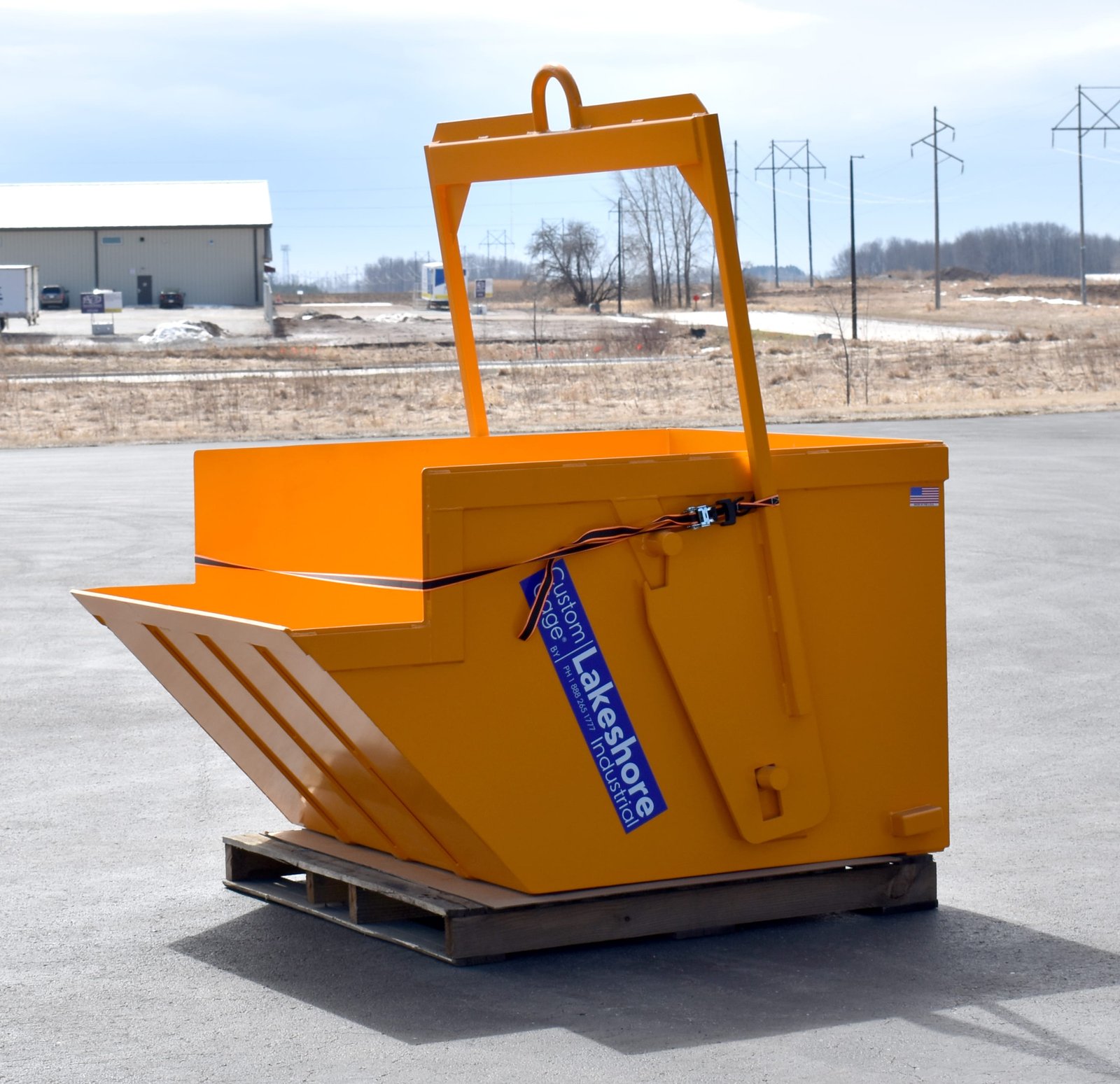
Industrial crane hoppers make material handling faster and more controlled, especially when dealing with heavy or uneven loads. But when these attachments are overloaded, the entire lifting system is put at risk.
When industrial hopper load capacity is exceeded or misjudged, structural stress and tipping risks rise sharply. OSHA’s crane safety standards are designed to prevent these failures, requiring that every lift stay within its rated limits, verified through proper inspection and documentation.
Meeting these standards begins with understanding how load capacity is determined, calculating it accurately for each lift, and maintaining compliance throughout every stage of hopper use.
What Is Hopper Load Capacity in Crane Operations?
A hopper’s load capacity represents the maximum weight it can hold and be safely lifted when attached to a crane. This figure accounts for the combined forces acting on the lifting system, including:
- Material weight
- Hopper weight
- Dynamic loads created during lifting or swinging
Because these factors constantly interact, the total load must be calculated precisely before every lift. Even a small error in estimating material weight or accounting for motion can cause the system to exceed its safe working range.
Manufacturers determine rated capacities through controlled testing that measures how the hopper structure performs under stress. They consider material strength, weld integrity, lifting point geometry, and safety margins built into the design.
The resulting capacity, displayed on the identification plate, assumes that the crane and rigging setup are properly matched to handle that weight. Staying within those limits ensures structural stability and prevents failures that could compromise both equipment and safety.
OSHA Regulations and Standards for Crane Capacity
The Occupational Safety and Health Administration (OSHA) enforces detailed requirements and crane safety standards that establish the framework for planning, rating, and inspecting lifting operations to prevent overloads.
Several key regulations and industry standards apply directly to crane hoppers and other below-the-hook attachments:
- 29 CFR 1926.1400–1442 (Cranes and Derricks in Construction): Defines how cranes must be configured and operated, including adherence to the manufacturer’s rated load chart. Operators must never exceed the total rated capacity at any boom angle or radius.
- ASME B30.20 (Below-the-Hook Lifting Devices): Establishes design, marking, and inspection requirements for hoppers, lifting beams, and similar attachments. Each device must display a permanent nameplate that shows its rated capacity and manufacturer’s identification.
- ASME BTH-1 (Design of Below-the-Hook Lifting Devices): Provides engineering criteria for calculating design loads, structural strength, and safety factors used in determining rated capacities.
- 29 CFR 1910.179 (Overhead and Gantry Cranes): Outlines inspection intervals and maintenance procedures. Daily visual checks, monthly inspections, and annual detailed examinations are necessary to ensure the mechanical and structural integrity of the equipment.
Applying Load Capacity Principles to Hopper Lifts
When using a crane hopper, the rated capacity of every component in the lifting chain must be evaluated together. The weakest link determines the safe working load. For example, even if a hopper is rated for 4,000 pounds, the crane’s configuration or the rigging sling may reduce the allowable load to 3,200 pounds. OSHA expects employers to calculate these limits before each lift.
Operators should consider:
- Total Gross Weight: Hopper weight plus material.
- Center of Gravity: Uneven loading can shift the balance, creating a side pull on crane booms.
- Dynamic Effects: Sudden starts, stops, or impacts increase load momentarily beyond static weight.
- Angle of Lift: Slings at angles less than 90 degrees increase tension and reduce rated capacity.
Documented lift plans are particularly valuable for repetitive hopper operations. These plans outline load calculations, rigging methods, and assigned personnel. They demonstrate compliance during OSHA audits and help crews consistently repeat safe practices.
Best Practices for Compliance and Safety Management
Safe hopper lifting isn’t achieved solely through operator skill. It depends on consistent procedures that control risk before, during, and after every lift. Effective compliance programs combine technical checks, documentation, and communication to ensure every component in the lifting system performs within its limits.
The following practices form the foundation of a reliable crane safety process:
- Pre-Use Inspection: Check hoppers for structural damage, cracked welds, or deformed lifting eyes. Verify identification plates and legibility of load markings.
- Load Estimation: Know the material density before filling. Keep within the hopper’s rated volume and weight.
- Rigging Verification: Match slings, shackles, and hooks to equal or greater capacities than the hopper load.
- Controlled Movement: Lift slowly to minimize dynamic shock. Avoid sudden slewing or high angles.
- Communication and Exclusion Zones: Maintain clear lines of sight or use spotters to ensure visibility is maintained. Keep personnel outside the swing radius.
- Training and Documentation: OSHA 1926.1427 requires that operators be certified and evaluated. Include hopper handling in refresher training.
Protect Your Team and Equipment With Lakeshore Industrial
Lakeshore Industrial specializes in engineered material handling equipment built for real-world conditions. From OSHA-compliant crane hoppers to precision-fabricated work platforms and lifting attachments, each product is designed to meet stringent safety and performance standards.
When you partner with Lakeshore, you gain access to industrial expertise, field-tested solutions, and a team that understands the balance between compliance and efficiency. Every piece of equipment is built with certified welds, high-quality materials, and clear documentation to ensure your crew operates safely and confidently.
Equip your operation with lifting solutions that align with OSHA crane compliance and long-term reliability. Contact Lakeshore Industrial today to strengthen your crane safety program and ensure your next lift starts and ends securely.