


In high-risk industrial work, a rescue plan is only as practical as the equipment you can deploy under pressure. Rescue cages are part of industrial safety equipment that can turn a written procedure into a workable recovery. This is especially true when your operations involve height exposure, limited access or time-sensitive medical response needs.
The term “rescue cage” is used differently across industries. In many facilities and construction environments, it is the personnel-rated cage or platform used to lift, lower or transfer people during an emergency, often by hoisting equipment under controlled procedures.
When you treat rescue cages as purpose-built rescue tools, you can align selection, training and oversight with the hazards you already manage.
Purpose and Importance of Rescue Cages
Rescue cages are engineered for emergency retrieval and medical access in environments where conventional rescue methods fail or introduce unacceptable delay. Unlike standard work platforms designed for routine tasks, rescue cages prioritize patient containment, medical clearance and rapid ingress and egress.
The Occupational Safety and Health Administration’s (OSHA’s) confined space standard (29 CFR 1910.146) and fall protection requirements emphasize the need for retrieval capability for workers in permit-required spaces or at elevated work areas. Many facilities use tripods, winches or retrieval harnesses, but those systems assume the worker remains conscious and able to assist. Rescue cages address scenarios where that assumption breaks down: entrapment, unconsciousness, fractures or hazardous atmospheres requiring immediate extraction with medical oversight.
The cost of not having one becomes clear during incident reviews. Delayed extraction, improvised rigging, secondary injuries to rescuers and regulatory findings all trace back to gaps in emergency equipment planning.
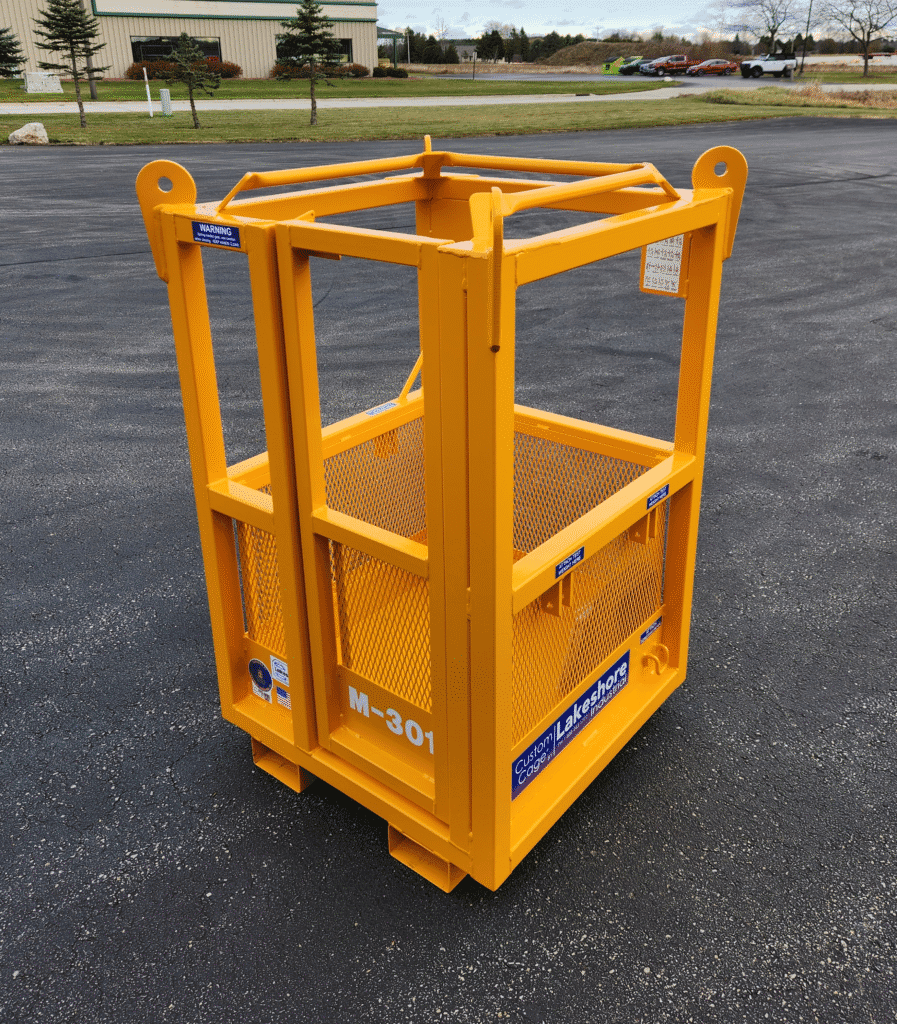
Functional Roles in Industrial Operations
Rescue cages serve three primary functions in high-risk settings:
Elevation Rescue and Retrieval
In steel, utilities, industrial construction and plant maintenance, you may need to remove a worker from an elevated location when stairs, ladders or mobile elevating work platforms cannot reach the work position. If a lift plan already exists for the area, a rescue cage can fit into that planning framework.
Confined-Space Support
If your rescue strategy includes non-entry retrieval, OSHA’s permit-required confined space standard requires that retrieval systems or methods be used whenever an authorized entrant enters a permit space, unless the equipment would increase overall risk or would not contribute to rescue.
It also specifies expectations for the harness and retrieval line. A rescue cage does not replace retrieval systems in most entries, but it can be part of the broader rescue capability when non-entry retrieval is not sufficient.
Emergency Transport and Controlled Movement
Some rescue scenarios require moving a person and an attending rescuer together, with tools or medical support. In those cases, the functional value is the platform itself: a stable working space with attachment points and barriers that support controlled handling.
Safety Design Features of Rescue Cages
Rescue cages should be evaluated the same way you evaluate any personnel lifting platform: by capacity, structural integrity, fall protection interface and how the cage connects to the lifting system.
Design details vary by manufacturer and application, but these features are commonly treated as baseline considerations for personnel platforms:
- Rated Capacity and Identification: The platform should clearly state maximum rated load and occupancy information on a data plate, and that information should remain legible.
- Tie-Off Compatibility and Fall Protection Use: Guidance for suspended personnel platforms commonly requires occupants to tie on with a lanyard to an attachment point capable of supporting fall impact, with exceptions depending on the specific work context.
- Pre-Use Inspection and Damage Control: A disciplined process includes inspecting the platform before each use and removing it from service if it has deficiencies, damage or unauthorized modifications.
- Proof Testing and Trial Lift Discipline: Platform procedures often require proof testing or a trial lift across the intended lift range when the lifting system is set up.
- Clearance Planning Around Energized Power Lines: If your lift path could encroach on power lines, OSHA requires planning and encroachment precautions. Table A specifies minimum clearance distances: 10 feet up to 50 kV, then increasing by voltage range.
If your rescue cage will be hoisted by a crane, align your internal requirements with a recognized consensus standard for personnel lifting systems. ASME B30.23 is specifically scoped to personnel lifting systems using platforms and hoisting equipment in defined cases.
Real-World Industrial Use Cases
Rescue cages see deployment across multiple sectors. In petrochemical facilities, they support confined-space rescue from reactors, distillation columns, and storage tanks. During a hydrogen sulfide exposure incident at a Gulf Coast refinery in 2019, an on-site rescue cage allowed plant responders to extract an unconscious operator from a separator vessel within six minutes of the alarm. External EMS required an additional 18 minutes to reach the facility.
Construction sites use rescue cages for fall protection during scaffolding, formwork, and steel erection. A 2021 incident at a bridge construction project in the Midwest involved a worker who fell into a caisson and sustained spinal injuries. A rescue cage deployed via mobile crane allowed paramedics to immobilize the worker and extract him without additional movement that could have caused paralysis.
Offshore platforms integrate rescue cages into emergency response plans for personnel retrieval from lower decks, helidecks and subsea structures. During a platform fire in the North Sea, rescue cages facilitated the evacuation of non-ambulatory personnel to standby vessels when helicopter operations were suspended due to smoke.
Power generation facilities use rescue cages for turbine maintenance, cooling tower access and boiler inspections. Mining operations deploy them for shaft rescue, ventilation system access and equipment recovery.
Organizational and Regulatory Advantages
Beyond immediate life safety, rescue cages deliver measurable organizational benefits:
Stronger Program Alignment
OSHA’s confined space rule pushes you to define rescue capability in concrete terms: timeliness, proficiency, equipment readiness and practice frequency. A rescue cage can help you translate those requirements into a repeatable setup for certain scenarios.
Cleaner Documentation and Audits
When your rescue cage is supported by inspection routines, proof-testing records, and lift-planning artifacts, you reduce the gap between “we have a plan” and “we can execute it.” This mirrors the platform discipline found in suspended personnel platform guidance, including inspection before use and controls on unauthorized modification.
Better Supplier Control
If you buy rescue cages through industrial safety equipment suppliers, you can build procurement requirements that match your risk profile: clear capacity labeling, compatible tie-off points, documented inspection and testing expectations, and traceability to applicable OSHA and consensus standard obligations.
Sourcing Equipment That Matches Your Requirements
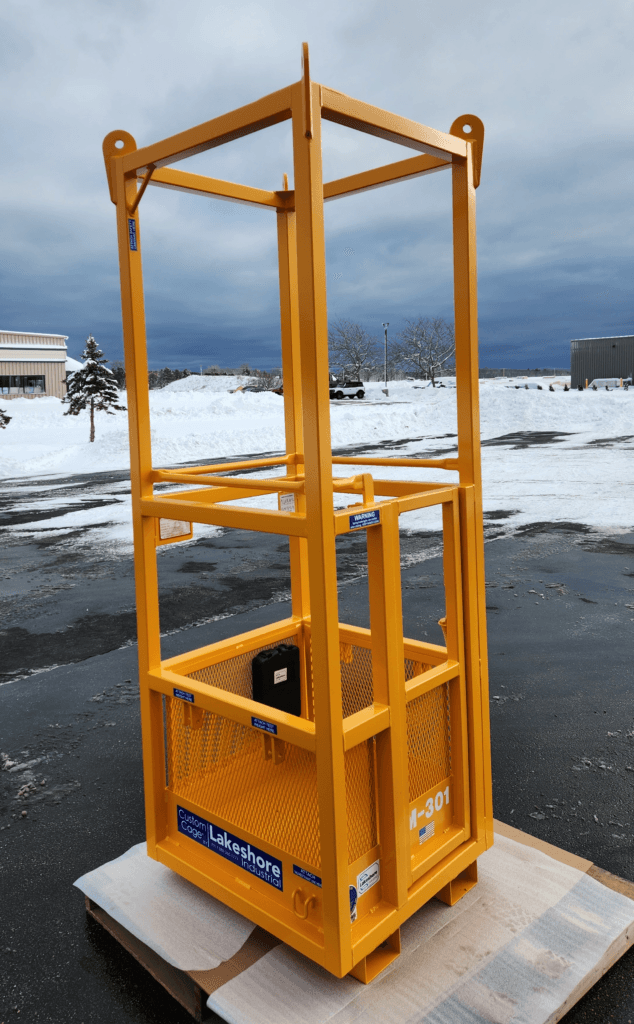
When you’re sourcing industrial and construction safety equipment for rescue capability, Lakeshore Industrial can support you with rescue cages and related personnel platform equipment, along with the documentation you need for training, inspection and lift planning.
If you already know the lift method, occupancy needs, and the environments you operate in, you can match the rescue cage configuration to those constraints. Contact Lakeshore Industrial today to discuss your site-specific requirements with our experts.